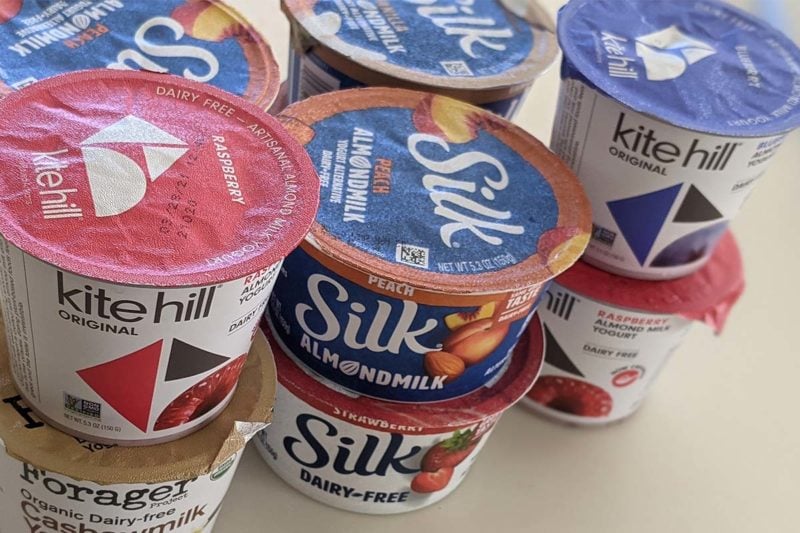
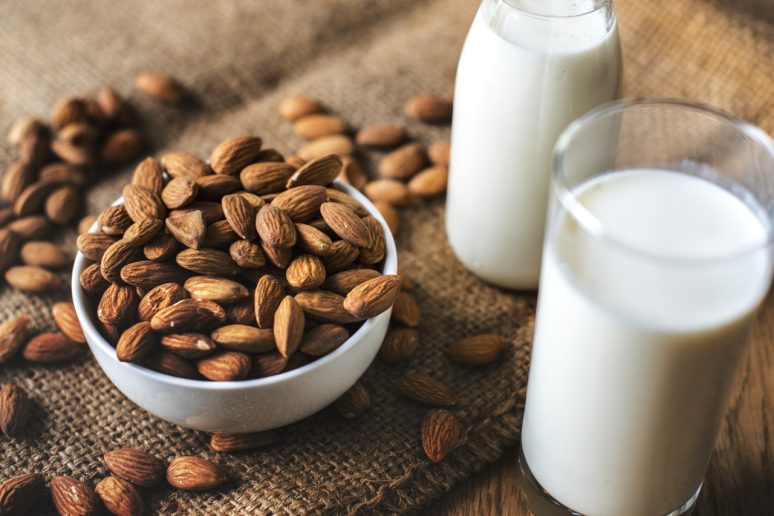
Almond milk is among the most popular types of vegan milk—right up there with oat milk and soy milk. Most grocery stores carry several brands. Like other types of dairy-free milk, it’s packaged either in refrigerated milk cartons or in shelf-stable aseptic boxes. You can buy it in regular, chocolate, vanilla, and unsweetened varieties.
The textures and flavors of the best almond milks are superb. The stuff is delicious poured over cereal or used as the base of a fruit smoothie.
Every year, the world’s dairy producers lose market share to almond milk. There are countless reasons to avoid cows’ milk, and almond milk offers some important advantages. It contains far less saturated fat than cows’ milk, and has no lactose or cholesterol. Almond milk also wins on flavor—many people strongly prefer it to cows’ milk. Best of all, almond milk lacks dairy’s connection to animal cruelty and the veal industry.
Almond milk does have a couple of shortcomings. Like cows’ milk, almond milk is quite resource intensive, since almond trees require a lot of water. Environmentally speaking, most other kinds of vegan milk are a better choice since they have a smaller water footprint. And almond milk is also less nutritious than other types of vegan milk.
Nutrition Profile
Even though almonds contain substantial amounts of protein, there’s surprisingly little protein in commercially-produced almond milk. Soy milk offers far superior protein and nutrient content. In fact, soy or pea-based milks contain about seven times more protein than does almond milk.
Regular almond milk varieties often contain nearly as much sugar as does soda. So consider buying an unsweetened variety—you’ll thereby cut your sugar intake while getting more nutrients per calorie. Happily, many almond milk brands are calcium-fortified, and consequently contain at least as much calcium as milk. But most other varieties of vegan milk are calcium-fortified as well, so almond milk isn’t special in this regard.
Making Vegan Milks at Home
Of all the vegan milks you can make in your kitchen, almond and cashew-based milks are the easiest. That’s because, unlike soy or oats, nuts don’t require cooking to be turned into milk.
Making almond milk from scratch is quick and simple. Since you don’t need your homemade milk to last for weeks, you can skip the additives and select higher-quality ingredients than what appears in commercial brands.
Rather than work from a recipe, the best way to make your first batch of almond milk is to wing it. After you’ve made a few batches you’ll get a feel for the proportions you like best. For your first attempt, begin with a small handful of raw almonds and two cups (about half a liter) of water. A Blendtec or Vitamix will give you superior results compared to a regular blender.
Commercial producers finely strain their milks to eliminate sediment, since their products have a lengthy shelf life. You may decide to not strain at all, especially if you’re pouring your homemade milk over cereal. Leaving your milk un-strained will retain its fiber and deliver better nutrition. Just shake thoroughly before serving.
Miyoko Schinner’s The Homemade Vegan Pantry offers thoroughly-tested recipes for almond, oat, and soy milk. Also consider picking up a copy of The Vegan Dairy by Catherine Atkinson.
Almond Milk Brands:
Some top brands sold in North America include:
- 365 Everyday Value: Almondmilk Beverage
- Blue Diamond: Almond Breeze
- Califia Farms: Almondmilk
- Pacific Natural Foods: Organic Almond Milk
- Silk: Almondmilk
- Trader Joe’s: Almond Beverage
Summing things up, almond milk is easy to find and offers several advantages over dairy products. Other vegan milks, however, are even better choices environmentally and nutritionally.